Google Operations - Multimedia Workflow
Multimedia QA Specialist & Technical Writer · Google Operations Center (Subsidiary of Alphabet Inc.) · 2021 – 2024
Due to the proprietary nature of this work, visual assets from the pipeline are not available for public display. I'm happy to discuss methodology, operational frameworks, and results in detail in a conversation.
Over three years at Google Operations Center, I designed and scaled the multimedia production pipeline that powers Google's advertiser Help Centers globally transitioning it from an externally outsourced function to a fully in-house, 24/7 operation across three time zones, while improving quality and reducing annual operating costs by USD 100K.
Recognition & Impact
97% SLA
Sustained week-on-week
100%
Quality calibration score
100K USD
Annual OPEX savings
16
Employees upskilled globally
9 Awards
Incl. highest global distinction
Operational Excellence
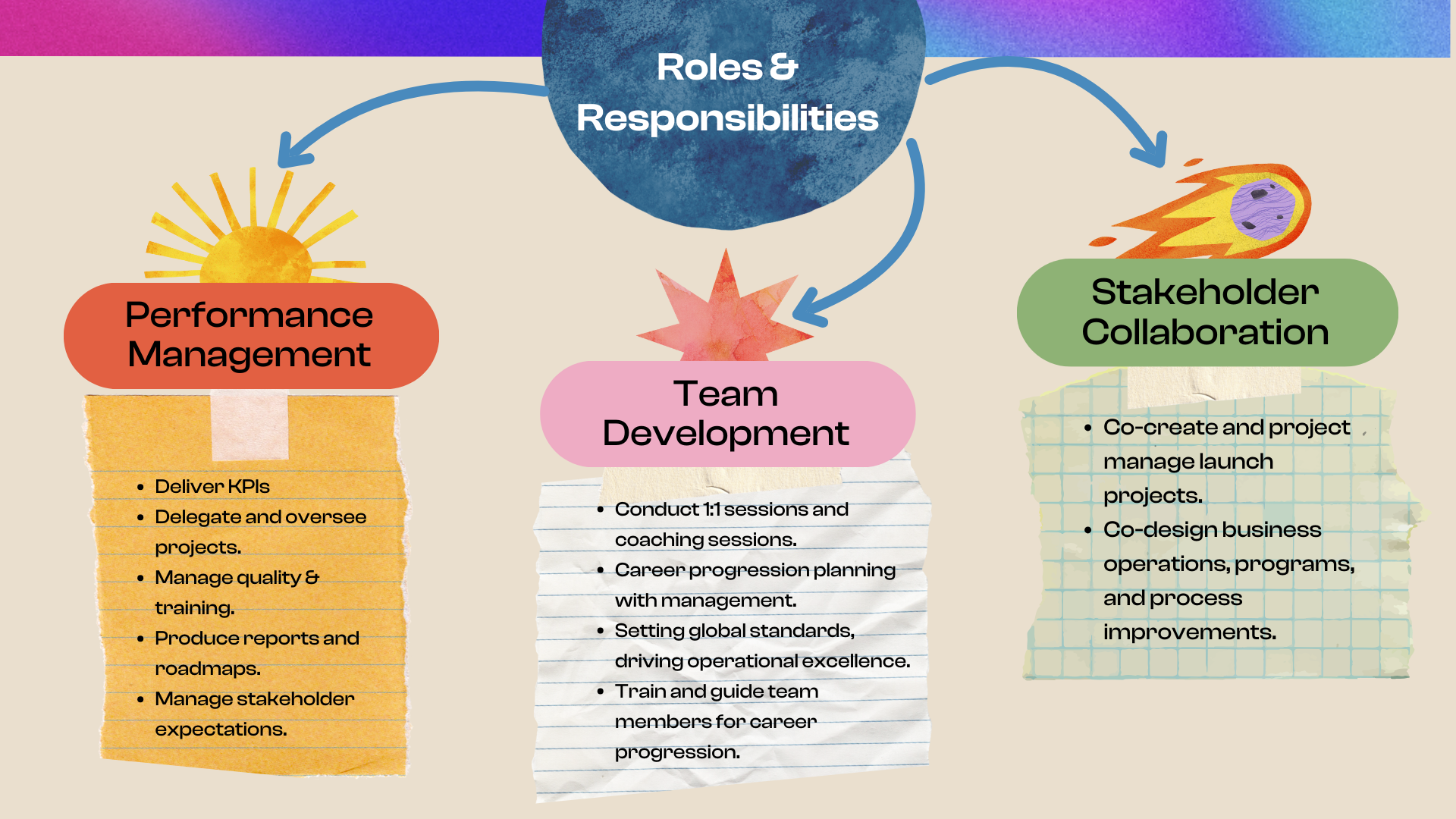
The shift to an in-house model was a deliberate commercial decision. Building internal capability proved significantly more cost-effective than continuing with third-party agency arrangements that had become an unsustainable OPEX burden. I joined as a founding team member, trained into the existing workflow from day one, and took progressive ownership of refining the process to make it scalable across a distributed team spanning three time zones.
The core challenge was not redesigning the workflow from scratch, but understanding it deeply enough to know what needed to change, and making those changes stick across a team with varying levels of technical familiarity.
Design Guidelines & Adherence
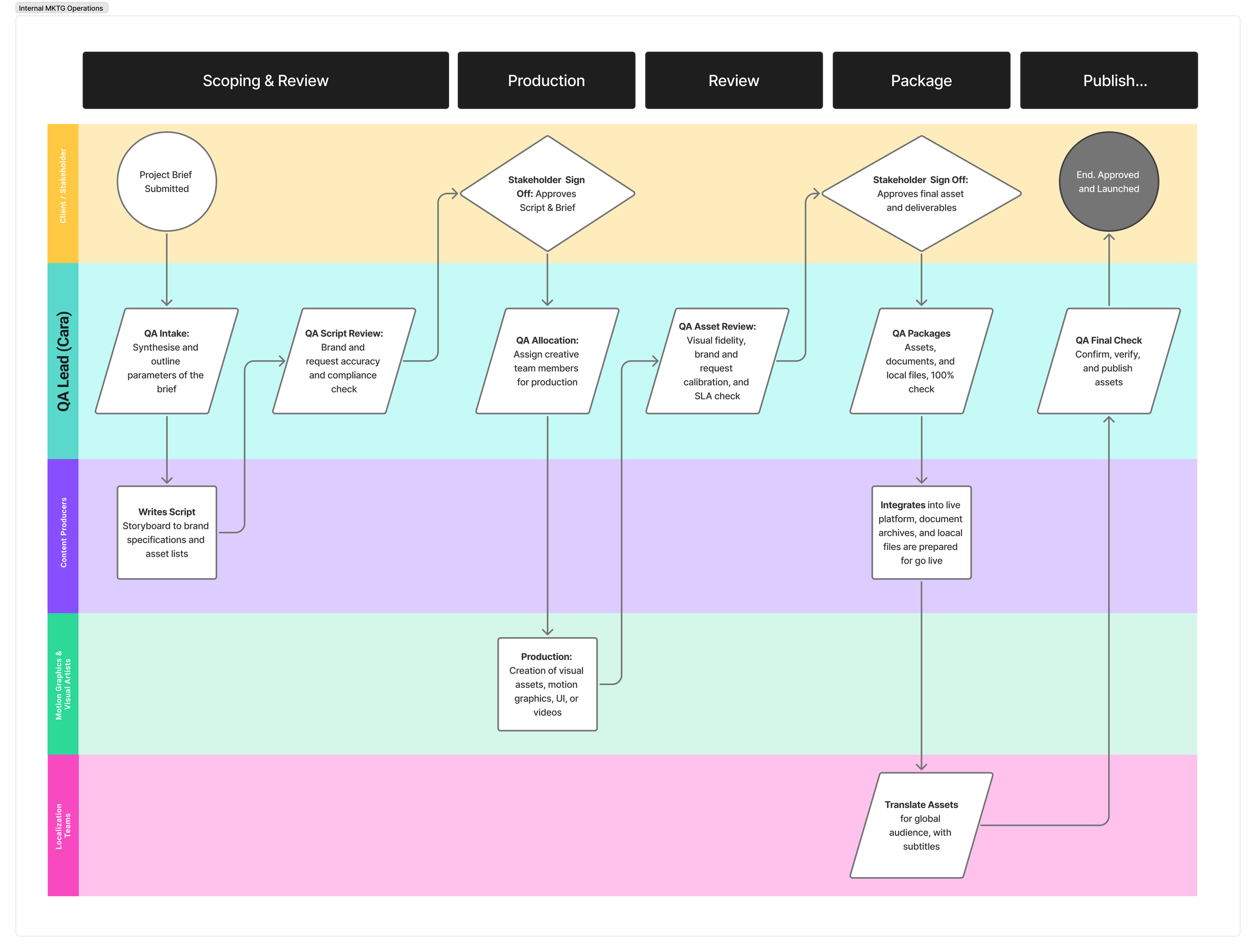
I designed the pipeline in four stages: Intake and briefing, production, QA review, and delivery.
Each stage had defined inputs, outputs, and quality checkpoints. Google's brand guidelines were translated into production templates and quality checklists that standardised creative output without constraining it, becoming the design system for the pipeline itself. A real-time feedback loop between Google's product teams and the production team eliminated the update lag, with a maximum 48-hour turnaround on update requests for live products.
Staggered QA review windows and a shared real-time production dashboard ensured cross-timezone handoffs were seamless rather than bottlenecked.
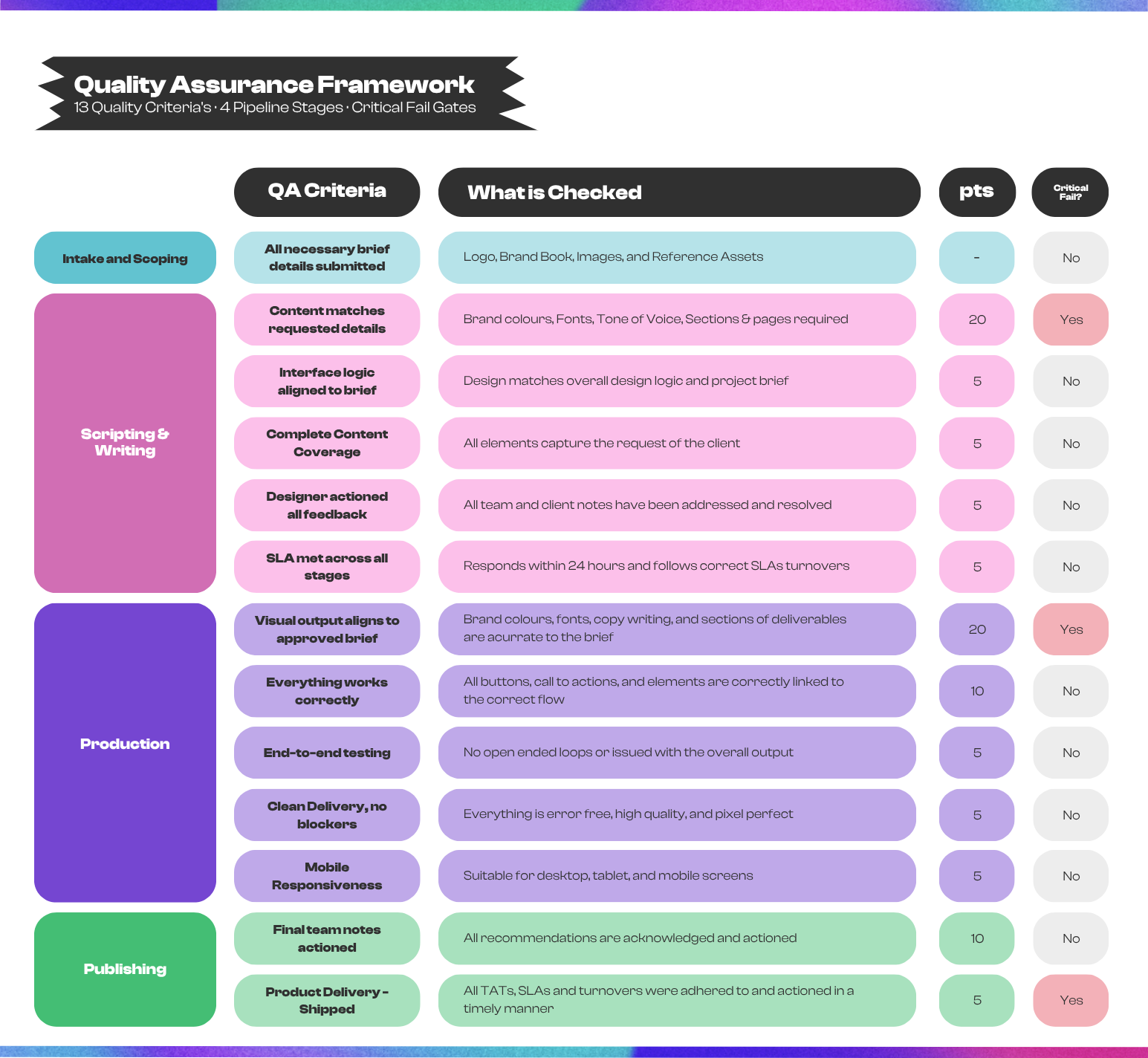
Sustaining a 97% SLA and a 100% quality calibration score across a 24/7 distributed team spanning three time zones doesn't happen by accident, it happens through systems precise enough to be followed and human enough to be trusted. What I implemented at Google Operations wasn't just a pipeline; it was a quality culture. The $100K in annual OPEX savings and 9 awards (including the highest global distinction) are outcomes I'm proud of. But the thing I'd point to is simpler: a team of 16 people across the globe, working to a standard I helped define, delivering without me needing to be in the room.