Frazer-Nash - Energy Blueprint
Design Strategist & Program Manager · University of Sydney in partnership with Frazer-Nash Consultancy · 2025 · ADP GradShow Finalist
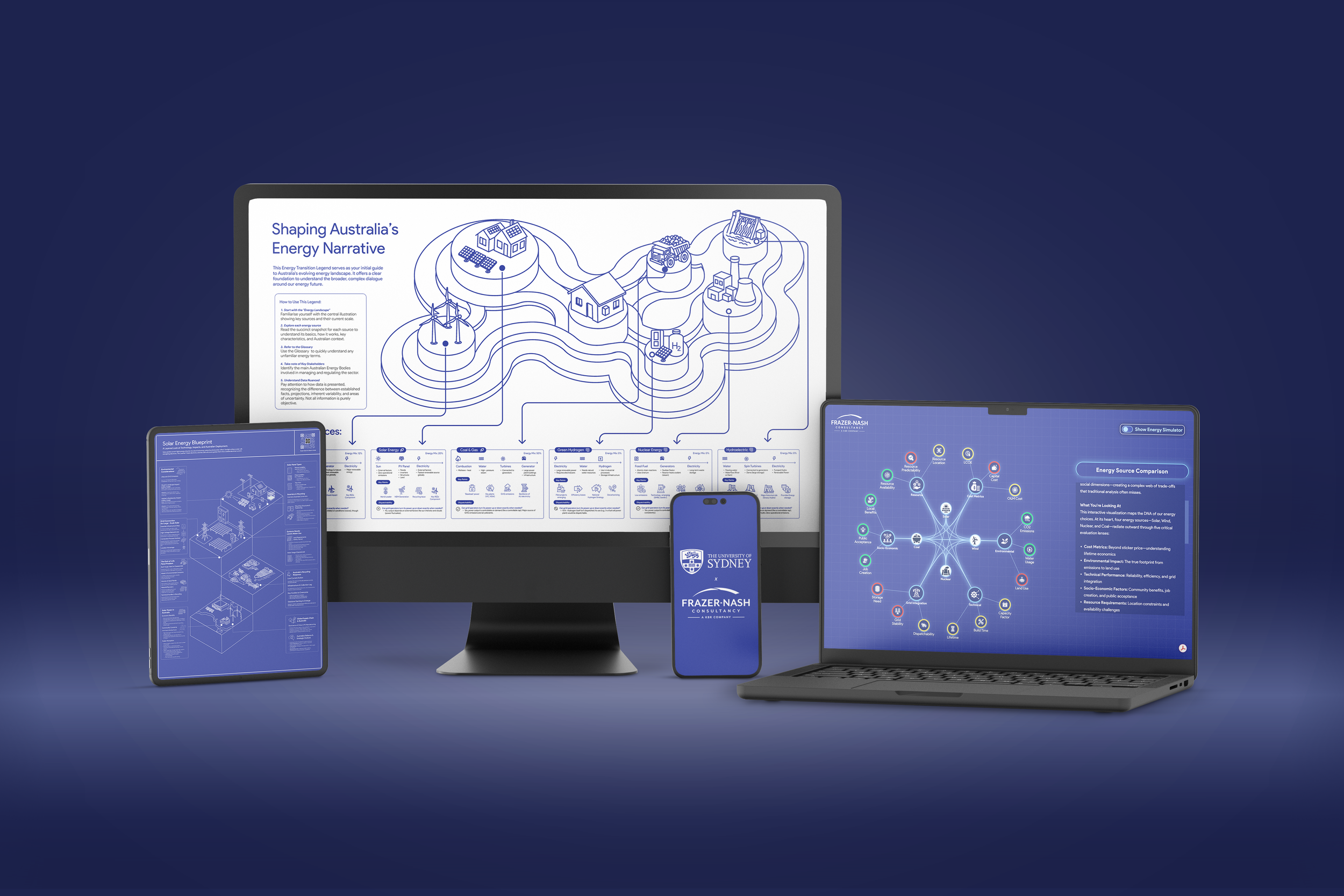
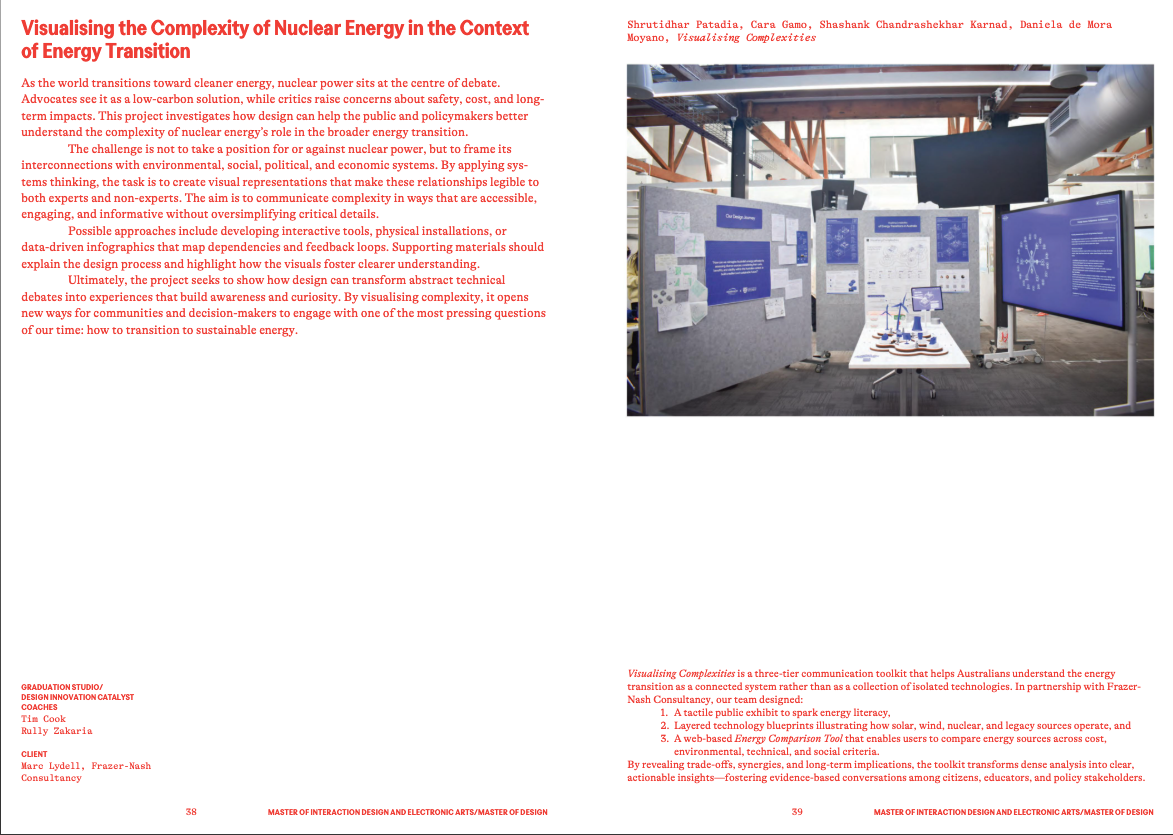
Partnering with Frazer-Nash Consultancy through USYD, I co-developed the translation of Australia's complex energy transition data into a multi-format strategic toolkit. The toolkit is designed to cut through divisive public discourse and give policymakers, executives, and the general public an objective, visual framework for understanding the real trade-offs in Australia's energy future.
Recognition & Impact
Partner & Audience
Global Engineering Firm & Consultancy
Three audiences: Public, Policy, and The Boardroom

Gradshow & Outputs
Hero Landscape, Energy Biographies, 3D model, and Boardroom tools
Discovery
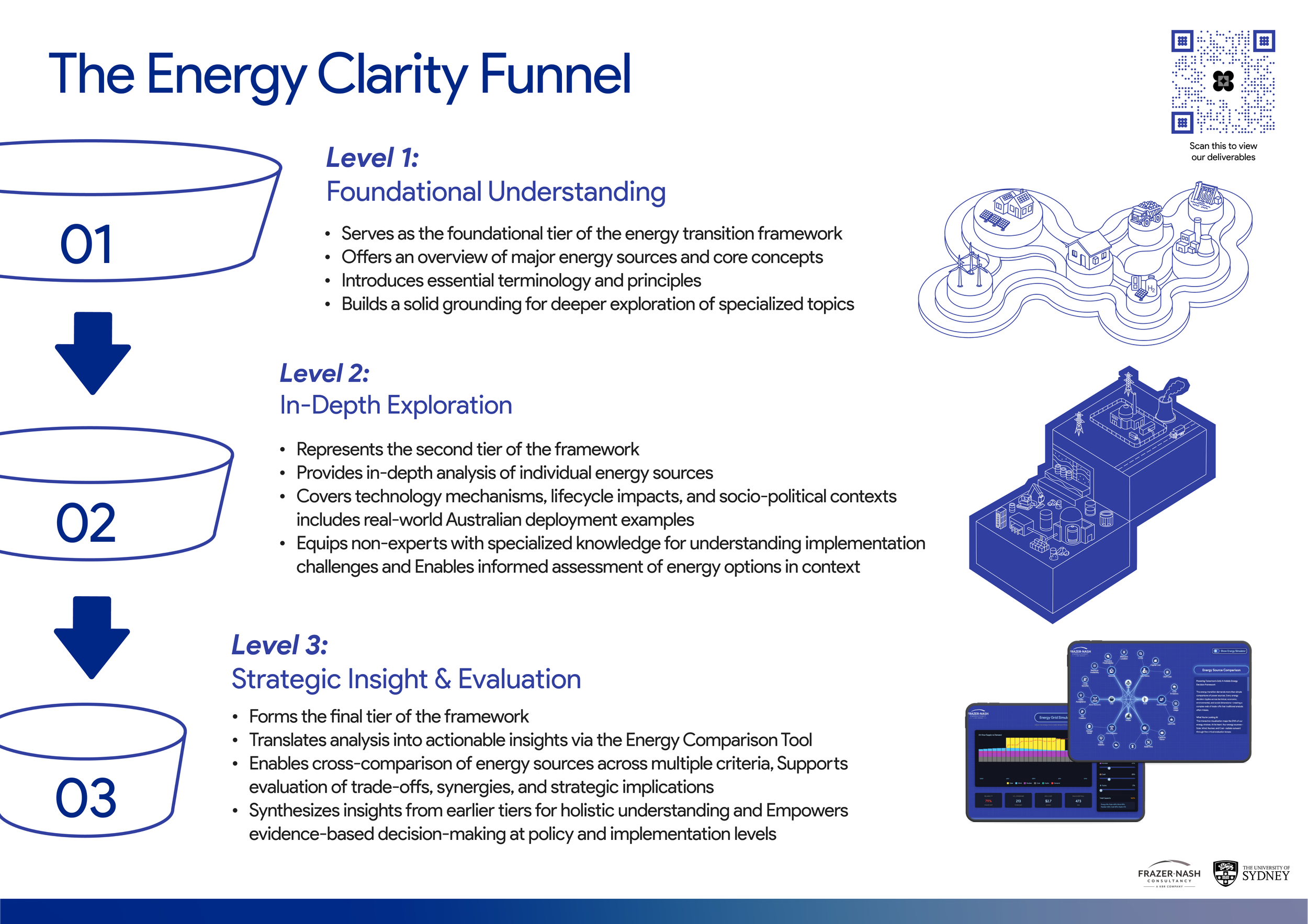
We mapped three distinct audience tiers: the general public, policy and advocacy groups, and the executive and boardroom level, each requiring a different communication register. The marketing funnel served as our structural framework, ensuring each toolkit output built from broad awareness toward informed decision-making. Fortnightly stakeholder syncs with Frazer-Nash's team served as a live research loop throughout, with each session generating new constraints and insights that fed directly into the next design sprint.
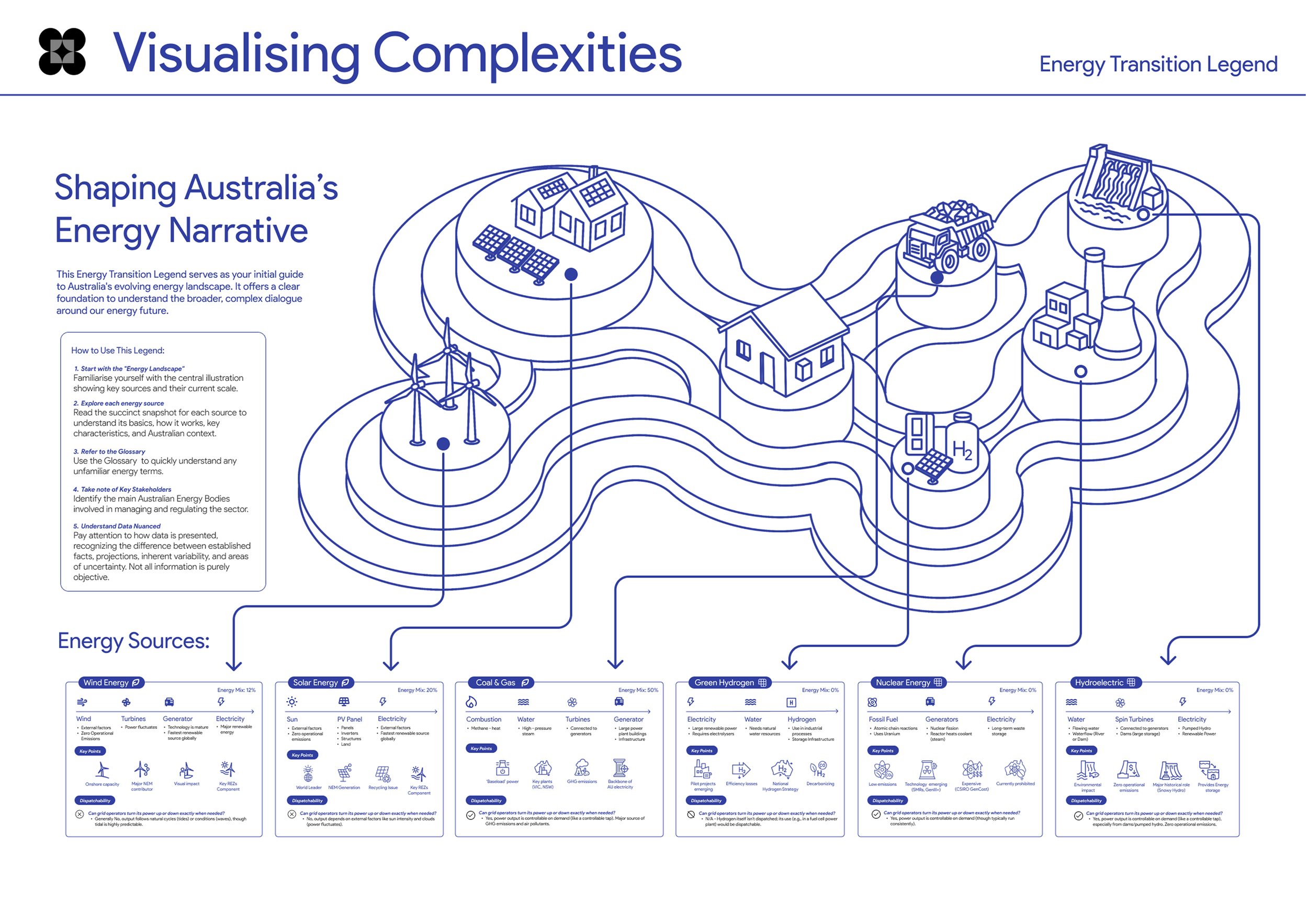
The centrepiece was the Hero Landscape, a large-format visual system showing Australia's entire energy grid as an interconnected whole, designed so every element earned its place by contributing to understanding rather than decoration. Energy Biographies provided individual narrative profiles for each fuel type, structured consistently to allow direct comparison across cost, reliability, carbon impact, and social acceptance.
I established the toolkit's brand identity and ran editorial and statistical QA reviews at every milestone, personally verifying that no visualisation was technically accurate but potentially misleading, and redesigning anything that was.
Design Decisions
Australia's energy transition is one of the most contested conversations in public policy and the most dangerous thing a design team can do in that space is oversimplify it. Our brief from Frazer-Nash wasn't to take a position, it was to give three very different audiences (the general public, policy advocates, and the boardroom) the tools to form their own. Every editorial and statistical QA review I ran was governed by a single question: is this accurate, and does it help? The toolkit that reached the ADP Graduate Show was one where every visualisation had earned its place.
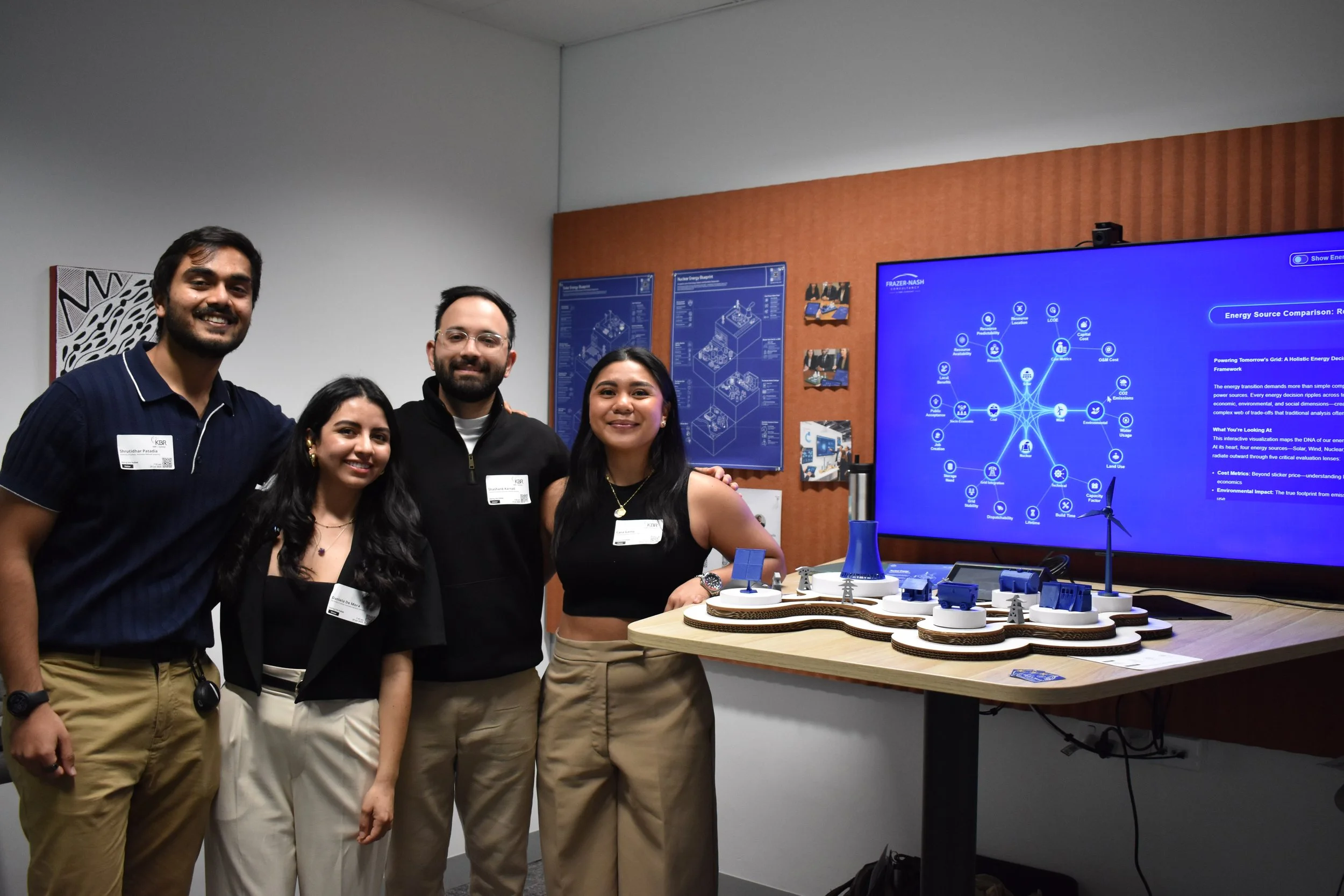
Presentation at the Frazer-Nash Office
Featured In
Special thanks to
[Group mates] Dani, Shruti, and Shashank / [Educators] Rully, Mariana, and Tim